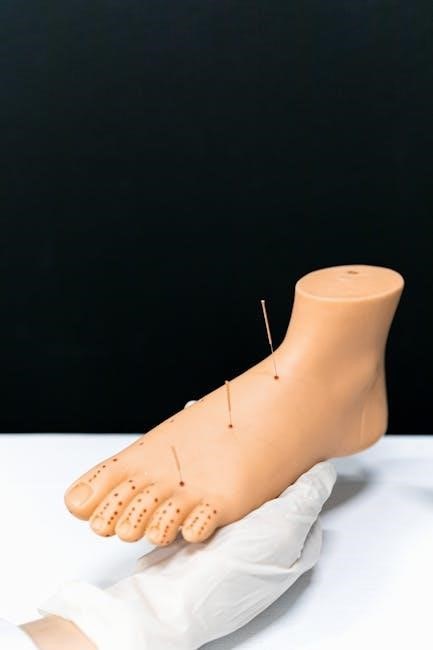
Marma points, 107 in total, are strategically distributed across the body, detailed in accessible PDF resources. These charts aid in understanding their locations for healing.
These points cover the entirety of the body, including extremities, torso, and head, offering a comprehensive system for Ayurvedic practice and self-study via PDF guides.
What are Marma Points?
Marma points represent vital junctions where life force, or prana, concentrates within the body. These 107 specific locations, meticulously mapped and often available in detailed PDF charts, are intersections of dhatus (tissues), srotas (channels), and key anatomical structures.
Understanding these points, as outlined in resources like downloadable PDF guides, is crucial for practitioners. They aren’t simply anatomical locations; they’re energetic gateways. The PDF resources illustrate how stimulating these points influences physiological functions, impacting organ systems and overall well-being. They radiate energy throughout the body.
Historical Significance in Ayurveda
Marma points have deep roots in ancient Ayurvedic tradition, with knowledge meticulously preserved over millennia. The Sushruta Samhita, a foundational text, provides detailed descriptions of these 107 points, often accessible today through translated PDF versions.
Historically, mastery of marma therapy was essential for Ayurvedic physicians, influencing surgical procedures and healing practices. Modern PDF resources aim to revive this ancient wisdom, offering contemporary practitioners access to the same knowledge. These PDF guides demonstrate the enduring relevance of marma points in holistic healthcare.
The Sushruta Samhita and Marma Knowledge
The Sushruta Samhita stands as a cornerstone of marma science, offering the most comprehensive detailing of the 107 vital points. Modern translations, frequently available as PDF documents, allow contemporary study of Sushruta’s original teachings.
This ancient text doesn’t merely list locations; it elucidates the effects of stimulation, potential for harm, and therapeutic applications. Accessing these insights through PDF resources empowers practitioners to understand the nuanced system. The Sushruta Samhita’s legacy continues through these readily available PDF guides, preserving invaluable marma knowledge.

Anatomy and Physiology of Marma Points
Marma points reside at anatomical intersections – bones, muscles, veins – near vital organs, as detailed in PDF charts. Understanding this anatomy is key.
Location at Intersections
Marma points aren’t randomly placed; they’re precisely located at junctures where different anatomical structures converge. These intersections include where bones meet, muscles attach, veins run closely to the surface, ligaments cross joints, and tendons connect to bone.
Detailed PDF resources and charts illustrate these specific locations, crucial for accurate identification and effective therapy. Ancient texts, like the Sushruta Samhita, meticulously describe these points, emphasizing their anatomical basis. This strategic placement allows practitioners to influence energy flow and physiological processes.
Understanding these intersections, as visualized in PDF guides, is fundamental to applying Marma therapy correctly and safely.
Relationship to Bones, Muscles, and Veins
Marma points exhibit a profound relationship with the body’s core structures – bones, muscles, and veins. They often reside near or on these tissues, influencing their function. PDF charts detailing these 107 points highlight this anatomical connection, showing proximity to skeletal landmarks and muscular attachments.
Veins, particularly, are significant, as Marma stimulation can impact circulation. Ayurvedic texts emphasize this interplay, explaining how affecting these points influences prana (life force) flow through the vascular system. Comprehensive PDF guides provide visual references for locating points relative to these structures, aiding practitioners in targeted therapy.
Connection to Major Organs
Marma points demonstrate a vital connection to the body’s major organs, forming a network that influences physiological processes. PDF resources illustrating the 107 points frequently showcase their proximity to vital structures like the heart, lungs, liver, and kidneys.
Stimulation of specific Marma points can, according to Ayurvedic principles, impact organ function, promoting balance and healing. Detailed PDF charts often correlate points with the organs they influence, aiding practitioners in targeted therapies. This anatomical relationship underscores the holistic nature of Marma therapy, addressing root causes of imbalance through precise point stimulation.
Classification of Marma Points
PDF guides categorize the 107 Marma points by location, structure, potential harm, and size, offering a detailed framework for understanding their unique properties.
Based on Location
Marma point location is a primary classification method, readily detailed in available PDF resources. These points are strategically positioned at junctures – where tissues intersect – throughout the body.
PDF charts illustrate 22 points on the lower extremities, 22 on the arms, 12 on the chest and stomach, and 14 along the back. A significant concentration, 37 points, resides on the head and neck.
Understanding these locations, as presented in PDF guides, is crucial for practitioners. The distribution ensures comprehensive coverage, impacting various physiological systems, and is foundational to effective Marma therapy.
Based on Structural Components
Marma points are classified based on the tissues they influence, a detail often visualized in PDF charts. These points reside at intersections of bones, muscles, veins, ligaments, and joints.
PDF resources highlight how each Marma relates to specific anatomical structures. This classification informs therapeutic approaches, as stimulating a point impacts surrounding tissues. Understanding these components, as detailed in PDF guides, is vital for precise treatment.
The interplay between structure and energy flow, illustrated in PDFs, emphasizes the holistic nature of Marma therapy and its connection to the body’s physiology.
Based on Potential for Harm
Marma points are categorized by the degree of injury possible with stimulation, a crucial aspect detailed in PDF guides. Some points, if improperly treated, can cause significant harm, while others are relatively safe.
PDF resources classify Marmas based on their vulnerability – points near vital organs require greater caution. This classification emphasizes the importance of qualified practitioners and careful study, readily available through detailed PDF charts.
Understanding this potential for harm, as outlined in PDFs, is paramount for safe and effective Marma therapy, preventing unintended consequences and promoting healing.
Based on Size
Marma points are also classified according to their size, a detail often visualized in comprehensive PDF charts. These sizes aren’t necessarily physical dimensions, but rather relate to the area of influence and energetic potency.
PDF guides typically categorize Marmas as Kala (small), Mamsa (medium), and Sira (large), impacting the technique used during therapy. Understanding these size distinctions, as presented in PDF resources, is vital for precise application.
The size classification, readily available in PDF formats, helps practitioners tailor their approach, ensuring effective stimulation and maximizing therapeutic benefits.

Distribution of the 107 Marma Points
PDF resources detail the 107 Marma points distributed across the body: 22 on lower limbs, 22 on arms, 12 on the torso, and 37 on the head.
Marma Points on the Lower Extremities (22 Points)
PDF guides dedicated to Marma points meticulously map the 22 located on the lower extremities. These points, vital for grounding and stability, are found at junctures of bone, muscle, and vein.
Detailed charts within these resources illustrate precise locations – ankles, knees, thighs, and hips – crucial for practitioners. Understanding their placement, as shown in PDF diagrams, allows for targeted therapy.
These lower extremity Marma points influence circulation, nerve function, and structural integrity. Accessing PDF versions of anatomical charts enhances learning and accurate application of Marma therapy techniques.
Marma Points on the Arms (22 Points)
PDF resources detailing Marma points showcase the 22 strategically positioned on the arms. These points, crucial for movement and sensory perception, are located at intersections of anatomical structures.
PDF charts clearly illustrate locations – shoulders, elbows, wrists, and hands – enabling precise identification for therapeutic application. Understanding these points supports balanced energy flow within the upper body.
These arm Marma points influence circulation, nerve conduction, and muscular function. Utilizing detailed PDF guides aids practitioners in delivering effective Marma therapy, promoting healing and well-being.
Marma Points on the Chest and Stomach (12 Points)
PDF guides dedicated to Marma points highlight the 12 located on the chest and stomach, vital areas for respiration and digestion. These points are found at junctures of muscles, veins, and bones, as detailed in comprehensive PDF charts.
PDF resources illustrate their precise locations, supporting therapeutic interventions for respiratory issues, digestive imbalances, and emotional well-being. Understanding these points is crucial for practitioners.
These Marma points influence vital organs like the heart and lungs. Utilizing detailed PDFs allows for targeted Marma therapy, promoting optimal function and overall health in the core region.
Marma Points on the Back (14 Points)
PDF resources detailing the 107 Marma points specifically identify 14 located along the back. These points reside at intersections of muscles, bones, and veins, as visually represented in detailed PDF charts.
These PDF guides demonstrate how these points correlate with the nervous system and spinal column, influencing structural integrity and energy flow. They are crucial for addressing musculoskeletal issues and promoting relaxation.
Marma therapy, guided by PDF illustrations, can alleviate back pain, improve posture, and release tension. Practitioners utilize these points to stimulate healing and restore balance, referencing comprehensive PDF documentation.
Marma Points on the Head and Neck (37 Points)
PDF guides dedicated to the 107 Marma points highlight a significant concentration – 37 – on the head and neck. These charts illustrate precise locations at junctures of vital structures, crucial for neurological well-being.
PDF resources demonstrate how stimulating these points can alleviate headaches, improve cognitive function, and address sinus issues. Detailed diagrams show proximity to major nerves and blood vessels.
Marma therapy, as outlined in PDF manuals, utilizes these points to balance prana (life force) and promote mental clarity. Practitioners rely on these visual aids for accurate application and effective treatment.

The Three Main Vital Centers
PDF resources often simplify the 107 Marma points, focusing on three vital centers: the bladder, heart, and head, housing key organs.
The Bladder (Lower Abdomen)
Marma points located in the lower abdomen, relating to the bladder, are crucial in Ayurvedic understanding. PDF guides detailing the 107 points often highlight these, emphasizing their connection to vital organs. These points influence urinary function and overall pelvic health.
Understanding their precise locations, as shown in PDF charts, is key for practitioners. Stimulation of these Marmas, according to Ayurvedic texts, can address imbalances affecting the bladder and lower abdominal region. Accessing detailed PDF resources provides a foundational knowledge for effective Marma therapy focused on this area.
The Heart
Marma points associated with the heart are central to Ayurvedic healing, and are thoroughly documented in available PDF resources detailing all 107 points. These points directly correlate with cardiovascular health and emotional well-being, as outlined in traditional texts.
PDF charts illustrate precise locations for stimulating these Marmas, aiming to balance the heart’s energy. Practitioners utilize this knowledge to address imbalances. Studying these PDF guides provides a deeper understanding of the heart’s energetic anatomy and how Marma therapy can support its optimal function, promoting vitality.
The Head
Marma points on the head – a significant 37 of the 107 total – are extensively mapped in detailed PDF guides. These resources showcase their precise locations, crucial for addressing neurological and sensory imbalances. The head Marmas are vital for mental clarity and overall well-being.
PDF charts aid practitioners in accurately locating and stimulating these points, promoting energy flow. Studying these guides reveals how Marma therapy can alleviate headaches, improve cognitive function, and balance the nervous system. Accessing these PDFs unlocks a deeper understanding of the head’s energetic anatomy.

Marma Therapy Chikitsa
Marma Therapy Chikitsa, detailed in available PDF resources, utilizes the 107 Marma points for healing. These guides explain application techniques and principles.
Principles of Marma Therapy
Marma Therapy operates on the principle of stimulating vital energy flow through the 107 Marma points. PDF guides detail how gentle pressure, or other techniques, applied to these junctures, can unlock blockages and restore balance.
Understanding the anatomical locations – intersections of dhatus (tissues) like bones, muscles, and veins – is crucial, as outlined in downloadable PDF charts. The therapy aims to harmonize doshas and promote self-healing. These resources emphasize a holistic approach, considering the interconnectedness of body, mind, and spirit. Proper application, guided by PDF instructions, avoids causing harm and maximizes therapeutic benefits.
Applications of Marma Therapy
Marma Therapy, utilizing the 107 points detailed in available PDF resources, offers diverse applications. These range from pain management and musculoskeletal issues to neurological and psychological imbalances.
PDF guides illustrate techniques for addressing specific conditions by targeting relevant Marma points. The therapy can be integrated with other Ayurvedic treatments, yoga, and massage. Practitioners use PDF charts to locate points accurately. It’s employed to enhance energy flow, improve organ function, and promote overall well-being. Careful study of PDF materials is vital for safe and effective application, respecting contraindications and individual needs.

Accessing Information: 107 Marma Points PDF
PDF resources detailing the 107 Marma points are readily available online, offering charts and descriptions for study and practical application of this healing modality.
Availability of PDF Resources
Numerous PDF resources comprehensively map the 107 Marma points, catering to both students and practitioners of Ayurveda. These guides often include detailed anatomical illustrations pinpointing precise locations on the body.
Online platforms and Ayurvedic clinics frequently offer downloadable charts, facilitating self-study and treatment planning. Searching for “107 Marma points PDF” yields a wealth of options, ranging from basic introductory guides to more advanced clinical manuals.
However, discerning reliable sources is crucial; prioritize materials from established Ayurvedic institutions or experienced practitioners to ensure accuracy and safety. These PDFs are invaluable tools for understanding and applying Marma therapy.
Reliable Sources for Marma Point Charts
When seeking PDF charts detailing the 107 Marma points, prioritize sources with established credibility. Look to Ayurvedic institutions and recognized schools offering comprehensive training programs.
The Ayurvedic Clinic and similar reputable centers often provide downloadable resources created by experienced practitioners. Academic publications and research papers referencing Marma therapy can also lead to accurate charts.
Exercise caution with freely available PDFs from unknown origins; verify the author’s qualifications and cross-reference information. PDFs from established publishers specializing in alternative medicine are generally trustworthy, ensuring safe and effective practice.
Using PDF Guides for Self-Study
PDF guides illustrating the 107 Marma points are invaluable for independent learning, but require a mindful approach. Begin by familiarizing yourself with the anatomical locations, correlating them with your own body.
Start with major points and gradually expand your knowledge. Use the charts alongside detailed descriptions of each Marma’s function and therapeutic application.
Remember, self-treatment should be approached cautiously. A solid understanding of Ayurvedic principles is crucial before attempting Marma therapy. Supplement PDF study with reputable online courses or workshops for safe and effective practice.

Advanced Concepts in Marma Therapy
PDF resources reveal the 108th Marma is the mind, linking points to energy flow and Doshas for holistic healing and deeper understanding.
The 108th Marma Point: The Mind
Marma therapy, traditionally focused on 107 physical points, extends its scope to encompass the mind as the 108th vital point. PDF guides exploring advanced concepts highlight this inclusion, recognizing the profound influence of mental state on overall well-being.
This addition signifies that true healing necessitates addressing not only the body’s physical vulnerabilities, as mapped by the 107 points, but also the subtle energies and patterns within the mind. Understanding this connection, often detailed in comprehensive PDF resources, allows practitioners to tailor treatments for a more complete and lasting therapeutic effect.
The mind, in this context, isn’t merely a cognitive function but a dynamic force influencing the efficacy of Marma point stimulation and the body’s inherent capacity for self-regulation.
Marma Points and Energy Flow
Marma points are considered vital junctions where energy, often referred to as prana, converges and radiates throughout the body. Detailed PDF charts illustrate how stimulating these 107 points can influence this energy flow, promoting balance and healing.
These points aren’t isolated locations; they act as nodes within a complex network, impacting the circulation of vital life force. PDF resources often depict these energetic pathways, demonstrating how specific Marma point combinations can address imbalances and restore harmonious function.
Understanding this energetic dimension, as explained in accessible PDF guides, is crucial for effective Marma therapy, moving beyond a purely anatomical approach.
Marma Points and Doshas
Marma points exhibit a strong relationship with the three Doshas – Vata, Pitta, and Kapha – fundamental energies in Ayurveda. Comprehensive PDF guides detail how stimulating specific points can pacify aggravated Doshas, restoring equilibrium.
Certain Marma points are particularly effective in balancing Vata, while others address Pitta or Kapha imbalances. PDF resources often categorize points based on their influence on these energies, offering targeted therapeutic approaches.
Utilizing PDF charts, practitioners can identify points that harmonize the Doshas, promoting overall health and well-being, understanding the 107 points’ unique energetic signatures.
Safety Considerations
PDF guides emphasize contraindications for Marma therapy, advising caution with certain conditions. Proper training and PDF-informed precautions are crucial for safe practice.
Contraindications for Marma Therapy
Marma therapy, detailed in PDF resources, isn’t suitable for everyone. PDF guides highlight several contraindications, demanding careful consideration before practice. These include acute inflammation, fever, infectious diseases, and immediately after surgery.
Pregnant women, individuals with severe heart conditions, and those with active cancer should avoid Marma treatment. Direct application over varicose veins, wounds, or broken bones is also contraindicated. Always consult a qualified practitioner and thoroughly review PDF materials to understand these limitations, ensuring patient safety and responsible application of this ancient healing art.
Ignoring these guidelines, as outlined in comprehensive PDF charts, could lead to adverse effects.
Precautions and Guidelines
When utilizing Marma therapy, informed by PDF guides detailing the 107 points, several precautions are vital. Begin with gentle pressure, gradually increasing as tolerated, as shown in PDF illustrations. Always assess the patient’s comfort level throughout the session.
Avoid forceful manipulation, especially over sensitive areas. Hydration before and after treatment is recommended. Practitioners should maintain a clean and calm environment. PDF resources emphasize the importance of anatomical knowledge to avoid vital structures. Proper training and adherence to ethical guidelines, detailed in PDFs, are paramount for safe and effective practice.

Future Research and Developments
PDF resources fuel modern scientific validation of Marma points, integrating them with other healing modalities for enhanced therapeutic outcomes and further study.
Modern Scientific Validation
Marma point therapy is increasingly subject to modern scientific scrutiny, with researchers exploring the physiological effects of stimulation. Accessible PDF guides detailing the 107 points are becoming crucial tools for these investigations.
Studies are beginning to investigate correlations between Marma point locations and nerve densities, vascular pathways, and energetic meridians. The detailed anatomical information within these PDF resources assists in pinpointing precise stimulation sites.
Further research aims to quantify the impact of Marma therapy on various health conditions, utilizing standardized protocols and objective measurements, all aided by readily available PDF charts.
Integration with Other Healing Modalities
Marma therapy, informed by PDF guides detailing the 107 points, is increasingly integrated with complementary therapies. Practitioners are combining Marma techniques with acupuncture, massage, and physiotherapy to enhance treatment outcomes.
The detailed anatomical knowledge presented in these PDF resources allows for a more nuanced understanding of how Marma points interact with other systems. This synergy can address complex health concerns holistically.
Furthermore, Marma therapy is being explored alongside yoga and mindfulness practices, leveraging the energetic principles outlined in accessible PDF charts for a comprehensive wellness approach.
No Responses